整理/余冰玥 制图/周子祺(实习生) 张玉佳
哀乐中节
对于喜悦悲伤的宣泄要遵循法度,既要把情绪情感充分表达出来,又不可以偏激冲动,应当由实际情感出发,同时用礼仪来规范。这一理念既能作为人生哲理来遵循,也能用于指导艺术创作,其根本精神在于儒家的中庸之道,讲究不偏不倚,无过无不及,凡事都要把握好那个分寸。如果按照这种理念来从事写作、作诗、绘画等文艺活动,创出的作品自然会带有平衡中和的韵味,也合乎儒家所倡导的温柔敦厚的精神内涵。
Express Grief and Joy in Accordance with the Rules of Propriety
This concept suggests that all expressions of sorrow and happiness should be guided by propriety. It means artists should not go to extremes when they let their emotions out. They should begin with genuine feelings but eventually act under self-restraint. The idea can be applied to both philosophical thinking and artistic endeavors. The focus lies in the golden mean, a Confucian principle that champions impartiality, balance, and compromise, with propriety as the supreme guideline. If an artist follows the golden mean, whether they compose an essay, write a poem, or create a painting, their work will naturally reflect the beauty of equilibrium and underscore the gentleness and integrity of Confucian teachings.
引例
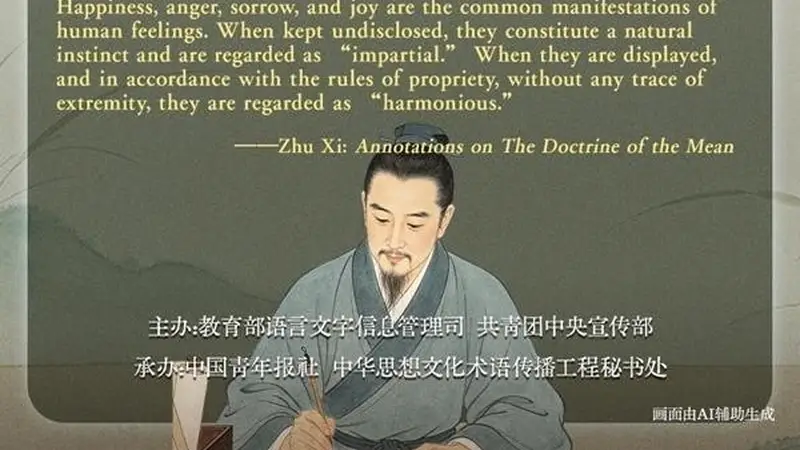
喜怒哀乐,属于人的情感。尚未表达时,它是天性,没有偏私,所以称为“中”。表达出来之后,如果合乎规范,情感就端正了,没有违逆偏激,所以称为“和。”(朱熹《中庸章句》)
Happiness, anger, sorrow, and joy are emotions shared by humans. When they remain unspoken, they embody a natural nature and are seen as "impartial." When they are expressed, and in line with the rules of propriety, without any hint of excess, they are viewed as "harmonious." (Zhu Xi: Annotations on The Doctrine of the Mean)
来源:中国青年报
2026年07月24日 02版

网友评论