
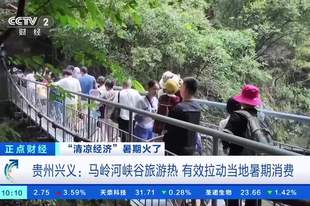
summer holiday tourism peak arrives, pleasant climate coupled with stunning scenery elevates visitor counts steadily at Xingyi's major scenic spots. Wanjfenglin, Wanjfenghu, Putigu Ancient Village take turns capturing public attention, with landscape beauty, ancient village charm, and local delicacies creating a vibrant display. The city leverages its natural and cultural tourism resources to diversify offerings, enhances site-specific service quality, implements heartwarming policies for visitors, and deepens integration of agriculture, culture, and tourism, igniting the summer tourism market with excellent environment, considerate service, and diverse activities, allowing tourists from all directions to savor natural beauty, local flavor, and cultural charm.
This summer, Wanjfenglin attracts vast numbers of domestic and regional tourists seeking refuge from heat. Beyond picturesque mountain landscapes, local cuisine gains popularity, especially Wanjfenglin egg fried rice, which heats up the local ambiance and powers cultural tourism spending.
At the General Bridge section of Wanjfenglin, Zhangji Egg Fried Rice, operating for over a decade, enjoys consistent patronage. The shop keeps traditional cooking methods, carefully selecting rice, pure pig oil, local eggs, and fermented chili peppers, strictly controlling food quality, earning praise from both regulars and new visitors for its authentic taste.
Hubei traveler Huang Feiyu shares, "The environment is quite nice here, and the weather is refreshing. The fermented chili peppers add unique flavor to the fried rice, different from what we're used to, and it's delicious. The price is also good, and it's reasonable. We spent less than 50 yuan for four people."
Amid summer tourism surge, Wanjfenglin's food and beverage sector heats up comprehensively. Qishi Family Restaurant and other outlets cater to family, educational trips, and group travel needs, with sharp rise in group orders this year, boosting significantly in receiving such teams.
Operator Ren Guoyang from Qishi Family Restaurant notes, "This summer sees the highest foot traffic in five or six years. Customers are numerous. We work with travel agencies daily, usually around seven to eight groups each day, sometimes with over 120 people in a single team."
While traditional dishes gain traction, innovation also refreshes the scene. Fengchaoji Egg Fried Rice Research Institute develops new varieties such as acid cabbage beef, multicolored glutinous rice, and seafood salt vegetables, catering to diverse tastes. The store averages 500 to 600 daily sales, extending operating hours based on visitor flow, invigorating tourism consumption through creative offerings.
Manager Peng Huifa from Fengchaoji Egg Fried Rice Research Institute states, "With high tourist traffic, Wanjfenglin tourism continues improving, bringing in more visitors. Typically, we sell five to six hundred portions a day."
Wanjfenghu's natural beauty draws as many admirers. Clear lake waters, layered green mountains form a picturesque scene, attracting tourists from various regions.
Jiangsu visitor Sun Xiansheng remarks, "Wanjfenghu's mountain landscape is magnificent with towering peaks mirrorred in the lake. Lush greenery along the shore brings constant joy and delight along the journey."
To accommodate summer crowds, Wanjfenghu refines its service. A new call-ahead queuing system registers boat ride details, storing tourists' mobile numbers, allowing them to rest or sightsee in shaded areas instead of sweltering in direct sunlight. The service greatly alleviates stress and reduces disputes. Furthermore, on-board photographers assist tourists with photography, capturing scenic moments.
Lu Lan, Supervisor at Wanjfenghu Ticketing Office, explains, "This queuing method first prevents arguments over waiting in line. Second, it lessens anxiety from prolonged standing."
Shaanxi visitor Shen Meiju comments, "The experience is excellent. The photographer taught us poses, and the service was very considerate, with detailed explanations."
While popular venues flourish, hidden Putigu Village deep in the Bini minority area becomes a new summer retreat. This 200-year-old village, featuring ancient architecture, millennia-old golden silk bamboo groves, and the ancient tea horse road among its "seven ancient" cultural resources, takes strides in integrating agriculture, culture, and tourism.
Locally, preservation remains the priority. Retaining the original village look, tourism infrastructure improvements, and the innovative "shared rural" model convert vacant homes into rural experience centers blending Bini cuisine and mountain leisure. Rustic villages and terraced fields attract family and educational tourists for immersive slow travel.
Hebei tourist Zhou Beibei observes, "This spot is perfect for bringing elders and children for a slow holiday. I heard celebrities have visited recently, and now that we're here, the entire village's folk culture and stone steps, house architecture feels very authentic."

网友评论